Plastic packaging does not simply disappear after disposal. It enters a chain of collection, sorting, reuse, recycling, incineration, or burial. The route depends on local infrastructure, material design, contamination, and market demand.
What happens to plastic packages after disposal is more complicated than a recycling symbol suggests. A clear PET bottle may be sorted, washed, shredded, and remade into flakes or fibers. A greasy film pouch may be rejected because machines cannot handle its layered structure. Some containers are collected but still sent to landfill when recycling capacity is limited. The label can promise recovery, yet the local system may lack the equipment to deliver it. That gap matters.
Dr. Jenna Jambeck, a respected plastic-waste researcher, has said, “The amount of plastic waste entering the ocean is equivalent to five grocery bags of trash for every foot of coastline around the world.” Her warning connects disposal choices with measurable environmental consequences. It also challenges comfortable assumptions about packaging recovery.
The reality is uneven.
This article examines each post-disposal pathway, from the household bin to the sorting facility. It will follow the sounds, residue, and decisions behind the process: conveyor belts shaking, workers removing contaminants, and bales waiting for buyers. Recycling can reduce demand for virgin plastic, but it is not automatic or unlimited. Better packaging design helps, yet consumer behavior and public infrastructure remain essential. Some claims deserve skepticism. A package marked recyclable may not be recycled. Understanding that difference is a practical step toward more responsible choices in 2026.
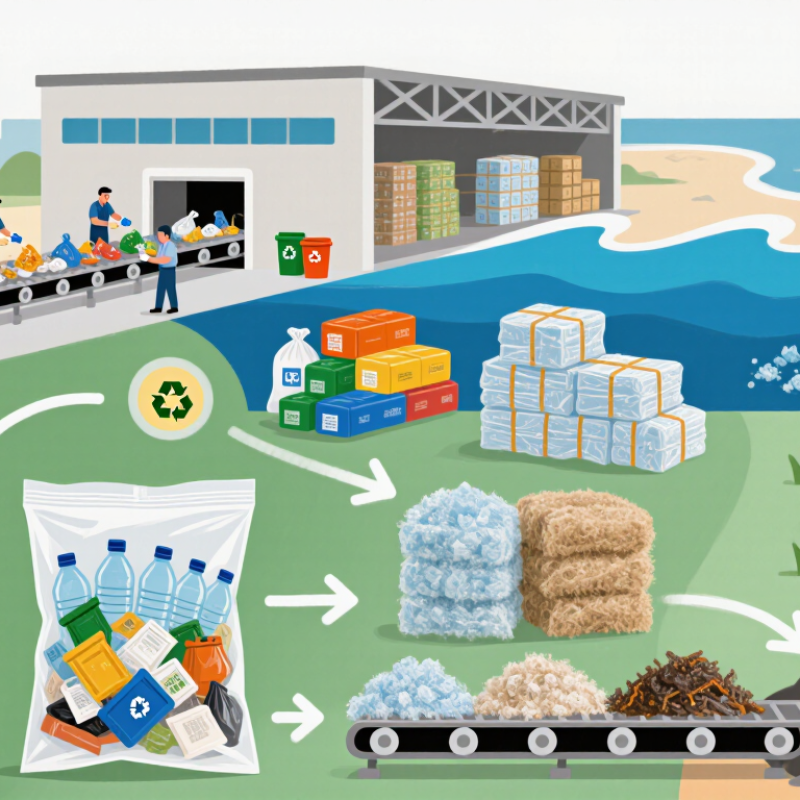
When plastic packaging leaves your hand, its journey begins in a collection bin, not a recycling machine. Workers or collection crews move the material to a transfer station. There, staff may remove obvious food waste, liquids, and unrelated objects. A damp container can affect nearby paper and plastic. Small mistakes spread quickly.
At a sorting facility, conveyor belts carry the mixed materials under magnets, screens, air jets, and optical scanners. These systems separate plastic by shape, size, color, and resin type. Human workers still inspect the line. They remove batteries, tangled bags, and items that could damage equipment. The material is then pressed into bales and sent to a processor. This stage determines whether the packaging has a practical recovery route.
Not every item reaches recycling. Thin films, dark containers, multilayer pouches, and heavily contaminated packaging may be rejected. A rejected load can travel to controlled disposal or energy recovery, depending on local infrastructure. Labels and caps also complicate sorting, although they are not always the main problem. Clean, empty packaging usually moves more reliably.
The process is efficient, but imperfect. I have seen how one greasy container can reduce confidence in an entire batch. That reality deserves honesty. Recycling depends on collection systems, facility equipment, packaging design, and local demand. Disposal is not a single event. It is a chain of decisions, beginning the moment the package enters the bin.
| Stage | Disposal Stage | Typical Timing | Main Route | What Happens First | Likely Result |
|---|---|---|---|---|---|
| 1 | Placement and Collection | Immediately to several days | Recycling bin, general-waste bin, collection point, or litter pathway | After disposal, the package is collected with other materials or remains outside the managed waste system if it is littered or improperly discarded. | The disposal route is largely determined by the collection system, local rules, package design, and whether the item is clean and identifiable. |
| 2 | Transfer and Transport | Same day to several days | Material recovery facility, recycling facility, landfill, or energy-recovery facility | Collected waste is consolidated and transported. Recyclable materials may be mixed with other packaging before reaching a sorting facility. | Handling can cause additional contamination, compaction, or loss of lightweight packaging before sorting. |
| 3 | Initial Sorting | Hours to a few days | Mechanical and manual sorting | Screens, magnets, air systems, optical equipment, and workers separate materials by size, shape, weight, and polymer type. Food residue, liquids, films, and non-target items may be removed. | Only material that meets the facility’s specifications proceeds to recycling; the rest is commonly sent to disposal or energy recovery. |
| 4 | Preparation for Mechanical Recycling | Hours to several days | Washing, shredding, grinding, and reprocessing | Accepted plastic is separated further, washed where appropriate, reduced into flakes, dried, and melted or formed into recycled resin. | The material may become recycled plastic feedstock. Yield decreases when packaging is multilayered, heavily contaminated, too small, or made from incompatible polymers. |
| 5 | Recycling Limitations | During sorting and processing | Reject stream from recycling operations | Labels, adhesives, additives, pigments, food residue, mixed polymers, and degradation from heat can make a package unsuitable for the intended recycling process. | Rejected material may be landfilled, combusted with energy recovery, or become mismanaged if collection and disposal controls are inadequate. |
| 6 | Landfill Disposal | Days to decades for site operations; persistence can be much longer | Engineered landfill | Plastic packaging is buried and compacted. In a modern landfill, limited oxygen and restricted sunlight slow biological and physical breakdown. | Plastic generally does not biodegrade quickly in a landfill. It can remain for a very long period, while additives and fragmented particles may require long-term environmental management. |
| 7 | Energy Recovery | Days to weeks after collection | Controlled combustion facility | Plastic is burned under controlled conditions to produce heat or electricity. Emission-control systems are used to manage pollutants. | The plastic’s material value is lost, while carbon dioxide and combustion residues are generated. This route is different from material recycling. |
| 8 | Mismanaged Waste and Leakage | Immediately after littering or during poor handling | Open dumping, leakage, waterways, and uncontrolled burning | Packaging can be blown or washed into drains, rivers, and coastal environments, or burned without adequate controls where waste services are insufficient. | Plastic may fragment into smaller pieces, create ingestion and entanglement risks, or release harmful smoke during uncontrolled burning. |
| 9 | Long-Term Fragmentation | Years to centuries, depending on conditions | Land, freshwater, marine, or landfill environment | Sunlight, oxygen, abrasion, heat, and weathering can weaken plastic and break it into progressively smaller fragments. This is fragmentation, not rapid biodegradation. | Microplastic particles may persist and move through soil, water, sediment, and biological systems. The exact rate depends on polymer type and environmental conditions. |
It enters a local collection system. Residents use bins, bags, or deposit points. Collection vehicles carry it to a recovery facility.
Food residue, moisture, and mixed materials can lower an entire load’s value. A greasy container may be rejected quickly.
Workers and machines separate items by size, shape, resin type, and color. Screens, magnets, air jets, and optical scanners assist the process.
Optical scanners use infrared light to identify some plastic types. Dark or multilayer packaging may confuse them.
No. Global plastic waste recycling reached only 9% in 2019. Collection and sorting gaps remain major obstacles.
Rejected items usually go to a landfill or an approved waste-to-energy facility. Some may remain for decades or longer.
No. Local rules differ widely. A package rejected in one city may be accepted elsewhere.
Empty and scrape containers before disposal. Keep them dry and follow local instructions. Clean handling helps, but it cannot fix bonded layers.
They should reduce mixed materials, unnecessary coatings, and unclear labels. I may have underestimated design’s influence before. Better choices begin early.
What happens to plastic packages after disposal depends on the local waste management system, the package’s material, and its condition. First, discarded packaging is collected through household recycling, commercial programs, or general waste services. At sorting facilities, workers and machines separate plastics by type, color, size, and contamination level. Recyclable materials are compressed into bales and sent for processing, where they are cleaned, shredded, melted, and formed into pellets or other raw materials for new products.
Not all plastic packaging can be recycled. Items that are heavily contaminated, made from mixed materials, or too small for sorting may be sent to energy recovery facilities or landfills. These outcomes can create different environmental impacts, including greenhouse gas emissions, resource consumption, and the risk of long-term pollution. Better package design, accurate sorting, reuse, and responsible disposal can help conserve materials and reduce the environmental burden after use.

 Premir Plastic Package