Food packaging touches food before it reaches the table. That contact creates responsibility. This is why many manufacturers ask, “Why are food grade plastic packages necessary?” The answer involves safety, freshness, handling, and product trust.
Robert Gravani, a food-safety specialist and professor emeritus at Cornell University, has said, “Food safety is everyone’s responsibility.” His statement fits packaging decisions closely. A food-grade package should use materials designed for food contact. It should also withstand expected temperatures, moisture, pressure, and storage conditions. A sealed tray can protect sliced fruit from dust and repeated handling. A flexible pouch can reduce oxygen exposure and help preserve texture. Clear containers may also reveal leaks, damage, or contamination risks before purchase.
But plastic is not automatically safe. That assumption is too simple. Manufacturers must verify material specifications, additives, inks, closures, and production hygiene. They should review migration testing and maintain supplier records. They also need traceability when a batch requires investigation. Real factories can make mistakes. A weak seal, incorrect resin, or excessive heat may reduce protection. That uncomfortable fact deserves attention.
The seven tips in this guide examine practical choices behind responsible food packaging. They consider product compatibility, barrier performance, sealing quality, labeling, storage, inspection, and sustainability. Food-grade plastic does not replace careful handling. It supports it. When selected and controlled properly, it can help keep food cleaner, fresher, and easier to manage from production to consumption.
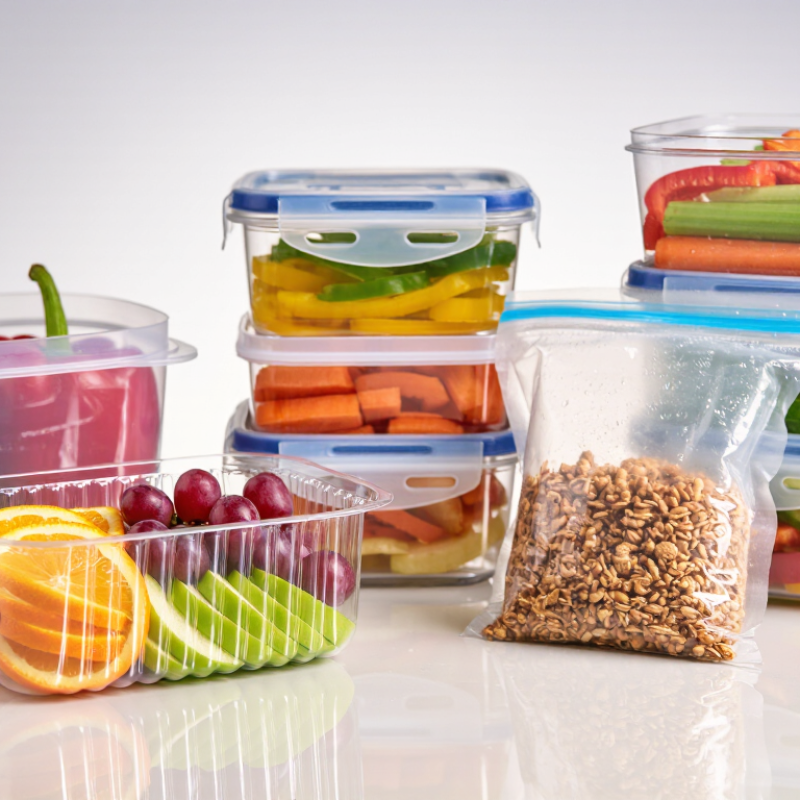
7 Tips Why Food Grade Plastic Packages Are Necessary?
What Makes Food-Grade Plastic Packaging Different?
Food-grade plastic is not ordinary plastic with a cleaner appearance. It is selected for controlled composition, low migration, and safe food contact. Tip 1: Check the intended use. A pouch for frozen fish needs different performance from a hot-fill sauce container. Tip 2: Match the material to temperature, acidity, fat, and storage time. Tip 3: Demand traceability from resin lot to finished package. In practice, records matter when a seal fails.
Tip 4: Protect the barrier. Oxygen, moisture, light, and odors can quietly damage quality. FAO’s The State of Food and Agriculture 2019 estimated that 14% of food is lost between harvest and retail. Suitable packaging cannot solve every loss, but it can slow oxidation and contamination. Tip 5: Verify testing. Migration testing, seal checks, and sanitation controls should support supplier declarations. The details are easy to skip. That is a weakness.
Tip 6: Use only necessary material. UNEP’s Food Waste Index Report 2024 estimated that 1.05 billion tonnes of food were wasted in 2022. Preventing waste matters, yet excessive packaging creates another burden. Tip 7: Design for recovery where local systems can handle it. A recyclable claim may sound reassuring, but collection and sorting decide the outcome. No package is perfect. Engineers should question both safety and material use before approving the final format.
Food-grade packaging is selected for safe food contact, suitable barrier performance, structural stability, and compliance with migration requirements. The chart compares the typical density ranges of seven widely used plastic materials in food packaging.
Typical density values are shown in g/cm³ and may vary by grade, additives, processing method, and manufacturer. Density alone does not determine food-contact safety: the intended use, additives, temperature, food type, and regulatory compliance must also be evaluated. In the European Union, food-contact plastics are subject to Regulation (EU) No 10/2011, including an overall migration limit of 10 mg/dm² for applicable plastic materials.
Food-grade plastic packaging protects food safety by creating a controlled barrier between food and its surroundings. In production work, I have seen how a clean-looking package can still fail when its material, seal, or storage conditions are ignored. The right plastic should be tested for chemical migration, odor transfer, and contact with specific foods. Fatty, acidic, and hot foods can behave differently. Material choice matters.
A reliable package needs more than a food-contact label. Manufacturers should verify raw material records, production hygiene, and traceability. The package must also resist punctures, moisture, oxygen, and light when the product requires it. A strong seal keeps dust and microorganisms away. It also reduces leaks during transport. Small details matter. Even a loose lid can damage safety.
Temperature deserves careful attention. Some plastics perform well at room temperature but weaken during heating or freezing. Clear storage instructions help workers and consumers avoid misuse. Regular testing can confirm that the package still performs after transportation and storage. Yet no package is perfect. Real conditions are sometimes messier than laboratory tests. Repeated handling, sunlight, or unexpected temperature changes may expose weaknesses. Food producers should review complaints, inspect damaged packs, and improve procedures instead of assuming the original design is enough.
| Tip | Food-Safety Need | How Food-Grade Plastic Helps | Relevant Fact or Control Point | Practical Verification |
|---|---|---|---|---|
| 1Use compliant materials | Packaging must not transfer harmful substances to food during its intended use. | Food-contact plastics are manufactured from substances assessed for specific food-contact applications. | In the United States, applicable food-contact plastic substances are regulated under 21 CFR Parts 174–179. In the European Union, food-contact materials are covered by Regulation (EC) No. 1935/2004. | Check supplier compliance documentation |
| 2Control chemical migration | Components from packaging can migrate into food if the material, temperature, contact time, or food type is unsuitable. | Approved formulations and proper food-contact testing help keep migration within applicable legal limits. | EU plastic food-contact materials are subject to overall migration and, where applicable, specific migration limits under Regulation (EU) No. 10/2011. | Review migration test results |
| 3Block microbial contamination | Exposure to bacteria, mold, dirt, and handling contaminants can reduce food safety and shelf life. | Sealed plastic packs create a physical barrier that helps prevent post-processing contamination when the package remains intact. | Packaging is one part of a food-safety system; sanitation, hygienic handling, temperature control, and validated processing are also required. | Inspect seal integrity and cleanliness |
| 4Protect against moisture and oxygen | Moisture can cause texture loss or microbial growth, while oxygen can accelerate oxidation and quality deterioration. | Barrier properties can be selected through resin type, thickness, coatings, or multilayer structures to match the food. | Water-vapor transmission and oxygen transmission depend on the plastic structure, thickness, temperature, humidity, and package design. | Match barrier data to shelf-life needs |
| 5Withstand intended temperatures | Heat, freezing, or repeated temperature changes can deform packaging or increase the risk of leakage and material interaction. | Food-grade plastics are selected according to their intended temperature range and use conditions. | Packaging suitability should be verified for the actual process, such as hot filling, refrigeration, freezing, microwave use, or retort processing. | Confirm temperature-use instructions |
| 6Prevent physical hazards | Damaged, cracked, or poorly sealed packaging may allow contamination or introduce fragments into food. | Appropriate strength, flexibility, puncture resistance, and seal performance help maintain package integrity during filling, transport, and storage. | Food-safety plans commonly treat packaging damage, seal failure, and foreign-material prevention as important control considerations. | Perform visual and seal inspections |
| 7Support traceability and safe handling | Clear identification helps operators manage batches, recalls, storage conditions, and correct use of packaging. | Labels, lot codes, material specifications, and documented use limits support controlled packaging operations. | HACCP-based systems use hazard analysis, preventive controls, monitoring, corrective actions, verification, and recordkeeping to manage food-safety risks. | Maintain lot and compliance records |
Food-grade plastic packages offer seven practical benefits for modern food handling: safety, hygiene, durability, visibility, convenience, shelf-life protection, and cost control. Their approved materials are tested for chemical migration, helping prevent unwanted substances from entering food. Clear containers also let workers inspect color, leaks, or foreign particles quickly. Useful in real kitchens.
A sealed pouch or tray limits contact with moisture, oxygen, dust, and handling surfaces. This protection can reduce spoilage and support longer distribution routes. The FAO reported that 14% of global food is lost between harvest and retail, showing why packaging performance matters. Lightweight plastic also lowers transport weight and resists breakage better than glass. For retailers, consistent shapes improve stacking and storage efficiency. For consumers, resealable closures and portion sizes reduce mess and food exposure. Food-grade packaging can also support traceability through printed batch details and tamper-evident features.
However, food-grade does not mean automatically sustainable. The OECD’s Global Plastics Outlook estimated that only 9% of plastic waste was recycled in 2019. That figure demands honest design choices. Packages should use suitable material quantities, clear labeling, and recycling-compatible structures where local systems can process them. In my experience, overpackaging is still easy to create when protection requirements are poorly understood. Cost savings may also disappear if seals fail or storage temperatures vary. Regular migration testing, seal checks, and documented supplier controls remain essential.
Food-grade plastic packaging is necessary because food travels through uncertain conditions. A sealed pouch, tray, or container can limit moisture, dust, oxygen, and physical contact. During loading, pallets may face vibration, pressure, and sudden temperature changes. Proper packaging helps maintain product quality from the warehouse to the retail shelf.
The Food and Agriculture Organization reported that about 14% of global food is lost between harvest and wholesale. The UNEP Food Waste Index 2024 estimated 1.05 billion tonnes of food waste in 2022. Better packaging cannot solve every loss, but it can reduce leakage, bruising, contamination, and premature spoilage. For chilled foods, a stable package also protects labels and seals when condensation appears. Small details matter.
Food-grade materials should match the product, temperature, storage time, and transport method. Packaging teams commonly assess seal strength, migration risk, odor transfer, and resistance to puncture. Codex food hygiene principles and ISO 22000-based systems support documented controls across the supply chain. Still, packaging is not automatically safe because it looks clean. I have seen weak closures fail under stacking pressure, revealing a gap between laboratory tests and warehouse reality. Field testing, traceability, and honest review remain essential.
Choosing food-grade plastic packaging requires more than checking a food-contact symbol. The material must match the product, filling process, storage temperature, and expected shelf life. Oxygen-sensitive foods may need high-barrier films, while fresh produce often needs controlled ventilation. Moisture protection also matters. A package can look clean yet fail during transport.
The UNEP Food Waste Index Report 2024 estimated that 1.05 billion tonnes of food were wasted in 2022. The FAO also reported that about 14% of food is lost between harvest and retail. Packaging cannot solve every loss, but suitable seals, barriers, and cushioning can help prevent spoilage and physical damage. Ask for migration testing, traceable raw materials, and documented compliance for the intended food and temperature. “Food grade” is not universal.
Review seal strength and leak resistance under real production conditions. Test after refrigeration, heating, stacking, and vibration. A practical mistake is judging packaging by appearance alone. Weak corners often appear only after filling. Recycled content can support sustainability, but its source, purity, and food-contact suitability require careful verification. The Packaging Institute notes that packaging performance depends on the entire distribution system, not only the plastic resin. Suppliers should provide technical data, test methods, and batch records. If documentation is vague, pause the purchase. Sometimes the cheaper package becomes the expensive failure.
It should be tested for chemical migration, odor transfer, and contact with specific foods. Material choice matters.
No. Fatty, acidic, and hot foods may affect plastics differently. A suitable package needs product-specific testing.
Sealed packaging limits contact with dust, moisture, oxygen, microorganisms, and handling surfaces. Even a loose lid can create problems.
Strong seals reduce leaks and keep unwanted particles away. A damaged pouch may fail before reaching the kitchen.
Not always. Some plastics weaken during heating or freezing. Follow clear storage and temperature instructions.
Clear containers allow quick checks for leaks, color changes, or foreign particles. Visibility helps workers notice trouble early.
It can reduce exposure to moisture, oxygen, light, and handling. This may slow spoilage during longer distribution routes.
No. Food safety and environmental performance are different questions. Only about 9% of plastic waste was recycled in 2019.
They should review migration results, seal performance, supplier records, and traceability. Real transport conditions can be messier than laboratory tests.
Inspect damaged packs and review complaints. Do not assume the original design is perfect. Mistakes can reveal weak procedures.
Food-grade plastic packaging is specially designed and manufactured to safely contact food without releasing harmful substances, changing taste, or allowing unwanted contamination. Why are food grade plastic packages necessary? They help protect food from moisture, dust, bacteria, odors, and physical damage while preserving freshness, quality, and shelf life. Compared with ordinary plastics, food-grade materials are selected for their purity, stability, and suitability for different food types and storage conditions.
The seven key benefits include improved hygiene, reliable protection, lightweight handling, flexible design, efficient storage, lower risk of product damage, and easier transportation. Food-grade packaging can also support portion control, clear product identification, and convenient use at home or in commercial settings. When choosing this type of packaging, users should consider the food’s temperature, acidity, moisture content, expected storage period, package strength, sealing performance, and recyclability. Selecting suitable materials and designs helps maintain food safety throughout storage, distribution, and everyday use.

Premir Plastic Package