Why Is Transparency Important in Plastic Packaging?

Time:2026-09-24 Author:Mason
0%

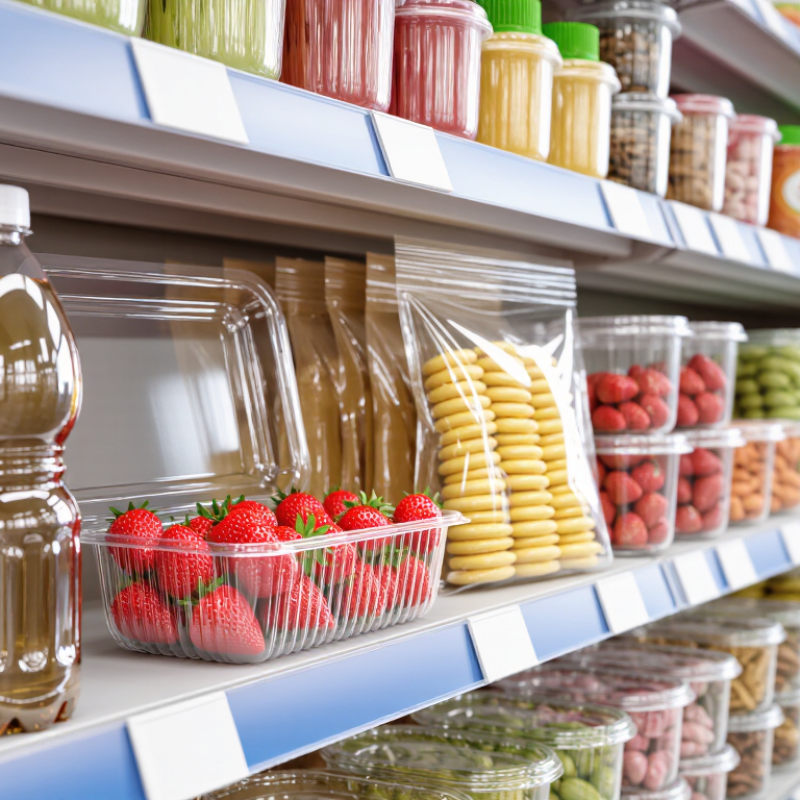
Why is transparency important for some plastic packages? The answer begins with visibility. Clear PET trays, bottles, and pouches let shoppers inspect color, texture, fill level, and possible damage before purchase. That small visual check can build confidence, especially for fresh food, cosmetics, and household products.

Transparency also supports quality control. Factory teams can notice air pockets, leaks, foreign particles, or uneven filling through the package wall. Retail workers can check stock quickly. Consumers can see how much product remains. Susan E. M. Selke, a packaging scientist and author, expresses this communication role clearly: “Packaging communicates before the product is opened.” Her point remains practical on a store shelf, where the package often speaks first.

Still, clear plastic is not automatically the best choice. Light may damage sensitive contents. Some products need strong barriers against oxygen, moisture, or ultraviolet exposure. Colored or opaque layers can provide protection, even when they hide the product. This creates a real design tension. Visibility attracts attention, but protection preserves quality.

Good packaging decisions require more than appearance. Engineers compare resin type, wall thickness, closure performance, barrier needs, and recycling-system compatibility. A transparent bottle may look simple, yet its label, adhesive, cap, and additives can affect recovery. The most honest answer is imperfect: transparency helps when consumers need visual evidence, but it should never replace safety, performance, or responsible material selection.
Why Is Transparency Important in Plastic Packaging?

What Transparency Means in Plastic Packaging

Transparency in plastic packaging is more than a clear appearance. It describes how easily light passes through a container and how clearly the contents can be seen. Clarity, haze, gloss, and color all shape that experience. A crystal-clear container may reveal product texture, fill level, and remaining quantity. By contrast, cloudy plastic can make the same product look heavier or less refined.

Packaging professionals often assess transparency with visual checks and instrument-based measurements. A practical inspection examines the container under controlled lighting, then compares it with an approved reference sample. Light matters. Viewing angle, wall thickness, surface scratches, and molding lines can change the result. Material selection also plays a major role. Some additives improve strength or color, yet they may reduce optical clarity. The best choice depends on the product, handling conditions, and intended appearance.

In real production, a clear sample may not stay clear after heating, filling, or repeated handling. Heat, moisture, and processing stress can create tiny distortions or visible haze. That detail is easy to miss during early design reviews. Clear plastic is not always truly transparent. Testing should therefore cover both appearance and performance, with results recorded for consistent quality control. Honest packaging decisions also recognize a limitation: maximum transparency may not provide the best protection, privacy, or user experience for every product.

How Clear Packaging Improves Product Visibility

Why Is Transparency Important in Plastic Packaging?

Clear packaging lets shoppers inspect a product before purchase. They can see its color, texture, fill level, and condition. A transparent pouch also exposes crushed pieces, leaking seals, or unwanted particles. These details support faster quality judgments at the shelf.

A 2023 NielsenIQ Global Sustainability Report found that 78% of respondents considered sustainability important. Clear plastic can support this expectation when it shows practical information, such as remaining quantity or visible recycled content. However, transparency does not automatically prove responsible packaging. It may even create doubt when a package looks oversized or contains excessive empty space. That criticism is fair.

Packaging teams can improve visibility with a clean front panel, a readable fill line, and controlled gloss. In production audits, these features help operators check seal placement and product consistency. A transparent window can also reduce unnecessary opening during retail handling. Small details matter.

PMMI’s 2023 packaging trends research highlights product visibility and inspection as continuing priorities for packaging operations. Yet clear films can expose products to light, heat, and handling damage. They may also show scuffs more easily. I have seen attractive packaging lose credibility because fingerprints covered the viewing area. Better visibility needs better material choices, not simply more transparency. U.S. and international food-contact requirements must still guide material selection, inks, adhesives, and closures.

The Link Between Transparency and Consumer Trust

Why Is Transparency Important in Plastic Packaging?

Transparent plastic packaging does more than display a product. It gives consumers a quick visual check before purchase. They can see the color, texture, quantity, and any unexpected damage. This small moment can reduce doubt, especially when the package sits under bright store lighting. In practical packaging reviews, visible contents often make quality concerns easier to identify. A clear pouch also helps shoppers compare products without relying only on advertising claims. Trust begins with evidence.

Yet transparency is not automatically honesty. A glossy package may hide weak seals, excessive empty space, or unclear material information. I have learned that visible contents can create confidence, but poor labeling can quickly weaken it. Consumers also notice mismatches between the package appearance and the actual product. That disappointment is concrete: a crushed corner, cloudy film, or missing date mark. Reliable packaging communication should explain what people can see, what they cannot see, and how the package should be handled.

Tips: Use clear material when product visibility supports informed decisions. Keep labels readable against the contents. Show accurate quantity and condition. Check seals, print quality, and film clarity before distribution. Avoid decorative layers that block important details. Invite feedback from real users; their expectations may expose problems internal inspections miss. Transparency should be measurable, not merely attractive.

Materials and Designs That Influence Packaging Clarity

Transparency in plastic packaging does more than display a product. It helps shoppers inspect fill level, color, texture, and possible separation. Clear packaging can also expose damage before purchase. That visibility depends on material choice, not appearance alone. PET often provides strong clarity and stiffness for bottles and trays. PP can look clear, but its structure may create a softer, cloudy effect. Recycled content can introduce slight color or haze, depending on sorting and processing quality. Small changes matter.

Thickness affects light transmission too. Thick corners may appear darker or less clear than flat walls. Stretching during forming can improve orientation, yet uneven heating may create cloudy zones. Surface texture, frost effects, and printed areas also change how people read the package. A smooth, polished surface usually shows contents clearly. A matte finish offers grip, but reduces visual inspection. Packaging teams should check haze, gloss, color, and seal performance together. Visual checks under store-like lighting are useful. Laboratory measurements remain essential. A package may look clear on a workbench, then appear dull under cool retail lights.

Design decisions shape trust. A wide viewing panel can reveal the actual product, while opaque shoulders may hide settling or headspace. Minimal graphics support clarity, but labels still need contrast and readable safety information. Closures, adhesives, and barrier coatings can create unexpected rings or shadows. This is where testing needs humility. A perfectly clear sample may fail after transport, heat exposure, or repeated handling. Teams sometimes judge clarity too early. That is a mistake. Review samples after filling, sealing, aging, and distribution simulation.

Environmental and Functional Limits of Transparent Plastic

Transparency makes plastic packaging easy to inspect. Consumers can see product color, fill level, and possible damage before purchase. In practical packaging trials, this visibility can reduce unnecessary opening and handling. It also supports quality checks during filling and transport. However, clear plastic has functional limits. Light can accelerate oxidation, fading, and nutrient loss in sensitive foods. A transparent pack may look clean while offering weak protection against ultraviolet exposure.

The environmental cost is also difficult to ignore. The OECD’s Global Plastics Outlook reports that only 9% of plastic waste was recycled worldwide in 2019. Around 22% was mismanaged, creating risks for land and waterways. Transparent formats may complicate sorting when they use multilayer structures, coatings, sleeves, or mixed materials. Clear appearance does not guarantee recyclability. It can even hide the material’s real complexity.

There is a trade-off here. Dark or opaque packaging may protect contents better, yet it can reduce visual trust and hinder inspection. Transparent packaging can prevent some product waste, but its benefits depend on collection systems and actual recycling access. The comparison is not perfectly clean. Design teams still need evidence from shelf-life testing, light-exposure trials, and local waste data. A package that looks sustainable may perform poorly after disposal. A clear pack that protects food effectively may still carry a heavier environmental burden. That uncomfortable gap deserves closer measurement.

Why Is Transparency Important in Plastic Packaging? — Environmental and Functional Limits of Transparent Plastic
Dimension Material or Packaging Factor Typical Data or Range Why It Matters Environmental or Functional Limitation
Consumer visibility Clear plastic packaging High visible-light transmission when the package is made from a clear, low-haze grade Allows consumers to inspect product quantity, color, texture, fill level, and possible defects before purchase. Light exposure can accelerate oxidation, color loss, nutrient degradation, and flavor changes in light-sensitive products.
Optical performance Haze and surface appearance Low haze is preferred for high-clarity packaging; haze increases with crystallinity, pigments, fillers, scratches, and surface roughness Lower haze improves product presentation and barcode or label readability. Optical clarity can decline after abrasion, thermal processing, recycling, or exposure to chemicals and ultraviolet radiation.
Common clear packaging resin PET Naturally clear in amorphous form Offers good clarity, strength, dimensional stability, and useful resistance to carbon dioxide loss in beverage containers. Not fully resistant to oxygen or moisture transmission; higher processing temperatures and additives may be needed for demanding applications.
Common translucent packaging resin HDPE Usually translucent or opaque Provides good impact resistance, chemical resistance, and moisture protection for many household and personal-care packages. Its semicrystalline structure scatters light, so it generally cannot provide the same glass-like clarity as amorphous plastics.
Clarity versus toughness Polypropylene (PP) Clear grades available Low density, good fatigue resistance, and heat resistance make PP useful for containers, closures, and hinged packaging. Standard PP can appear hazy because of crystallinity; nucleating agents or clarified grades may improve appearance but add formulation complexity.
Clarity versus barrier protection Polystyrene (PS) Clear but relatively brittle Can provide good transparency and is easy to process into rigid containers and trays. Limited impact resistance and comparatively weak barrier performance can restrict use for demanding food and chemical applications.
Light protection Transparent versus opaque or pigmented packaging Transparent packaging generally transmits more visible and ultraviolet radiation than pigmented packaging Transparency supports product inspection and consumer communication. Opaque, tinted, metallized, or coated structures may be preferable when protection from light is more important than direct visibility.
Oxygen barrier Uncoated transparent plastic films and containers Barrier performance varies widely with polymer type, thickness, temperature, humidity, and orientation Lower oxygen transmission helps reduce oxidation and extend the quality life of oxygen-sensitive products. A clear package may require a barrier coating, multilayer structure, or oxygen scavenger; these additions can complicate recycling.
Water-vapor barrier Polyolefin and polyester packaging Water-vapor transmission is material- and thickness-dependent; many plastics are not complete moisture barriers Moisture control helps protect dry foods, powders, pharmaceuticals, and moisture-sensitive components. High humidity can change barrier performance, especially in polar polymers and hydrophilic coatings.
Mechanical performance Film or container thickness Greater thickness generally improves stiffness and reduces gas transmission, but increases material use Structural strength reduces leakage, deformation, and product loss during handling and transport. Using more plastic increases mass, production energy, and the amount of material that must be collected and processed after use.
Thermal exposure Heat, filling, and storage temperature Barrier and dimensional performance usually change as temperature increases Thermal stability is important for hot filling, pasteurization, sterilization, and transport in warm climates. Some transparent plastics can warp, shrink, yellow, or lose impact strength when exposed to unsuitable temperatures.
Recycling compatibility Clear, single-polymer packaging Generally easier to sort and reprocess Unpigmented and clearly identified packaging can support higher-value recycling pathways where collection and sorting systems exist. Multilayer films, permanent coatings, adhesives, pigments, sleeves, and incompatible components may reduce recyclability.
Recycled-content appearance Post-consumer recycled plastic May show slight haze, grayness, yellowing, or color variation compared with virgin clear resin Using recycled content can reduce demand for virgin fossil-based feedstock and support circular-material systems. Decontamination, quality control, food-contact requirements, and appearance specifications can limit the amount used in highly transparent applications.
End-of-life sorting Clear versus colored packaging Clear packaging can preserve more potential applications for recycled resin than strongly colored packaging Colorless recycled resin may be used in a wider range of products than dark or heavily pigmented recyclate. Actual outcomes depend on local collection, optical sorting equipment, resin identification, contamination levels, and market demand.
Product protection trade-off Maximum transparency High visibility does not automatically provide high barrier protection Transparency improves communication and inspection without requiring the package to be opened. The best design may combine a transparent viewing area with a light-blocking label, sleeve, coating, or secondary package.
Design recommendation Purpose-driven transparency Use only where it adds measurable value Matching clarity, barrier performance, strength, and recyclability to the product can reduce unnecessary material and functional overdesign. Transparent packaging is not universally the most sustainable option; the appropriate choice depends on product sensitivity, package weight, service life, reuse, collection, and recycling conditions.
Data note: The values and descriptions represent typical behavior of commonly used plastic packaging materials. Actual performance depends on resin grade, additives, thickness, processing method, package geometry, temperature, humidity, product chemistry, and local recycling infrastructure. Barrier properties should be verified using the relevant ASTM, ISO, or equivalent test method for the intended application.

FAQS

What does transparency mean in plastic packaging?

It describes how clearly light passes through the package. Clarity, haze, gloss, and color affect visibility. Clear plastic is not always perfectly transparent.

Why is clear packaging useful to shoppers?

It lets shoppers inspect color, texture, quantity, and product condition. They may notice damage or unwanted particles. Trust begins with evidence.

Can transparent packaging improve quality checks?

Yes. Operators can inspect fill levels, seals, and product consistency. A clear viewing area may reduce unnecessary opening during handling. Small details matter.

What can make clear plastic look cloudy?

Heat, moisture, processing stress, scratches, and molding lines can reduce clarity. Wall thickness also changes the visual result. Early samples may look better than finished packages.

Does transparency always prove responsible packaging?

No. A clear package may still contain excessive empty space. Visible recycled content can help communication, but appearance alone proves little. That criticism is fair.

How can packaging teams improve product visibility?

Use a clean front panel and an accurate fill line. Keep labels readable against the product. Control gloss and avoid decorative layers that block important details.

What problems can excessive transparency create?

Clear materials may expose products to light, heat, and handling damage. Scuffs and fingerprints can become highly visible. Attractive packaging can lose credibility quickly.

How should transparency be tested before distribution?

Inspect the package under controlled lighting and compare it with an approved sample. Test it after heating, filling, and repeated handling. Record the results.

Is maximum transparency always the best choice?

No. Some products need privacy, light protection, or stronger visual shielding. The best material balances visibility, performance, and user expectations. I may underestimate those trade-offs.

Conclusion

Transparency in plastic packaging refers to how easily customers can see the product inside, from full clarity to a lightly tinted or translucent appearance. Why is transparency important for some plastic packages? Clear packaging improves product visibility, allowing consumers to examine the color, shape, quantity, and condition of an item before purchase. This visibility can make information easier to understand, support confident buying decisions, and strengthen trust by presenting the product openly rather than concealing it.

Packaging clarity depends on factors such as the type of plastic, additives, surface finish, thickness, and manufacturing process. Some designs use windows, polished surfaces, or controlled translucency to balance appearance with protection and usability. However, transparent plastic also has environmental and functional limits. It may offer less protection from light, heat, or oxygen, and not every clear material is equally easy to reuse or recycle. For this reason, effective packaging should consider product safety, durability, resource use, and end-of-life management alongside visual appeal.

Mason

Mason

Mason is a seasoned marketing professional with a deep expertise in the company's offerings and a passion for driving brand awareness. With a strong background in digital marketing strategies, he has an innate ability to connect with diverse audiences and effectively communicate product benefits.......